 English
 Русский
 Тоҷики

The state independence of the Republic of Tajikistan is a topic that not only reflects the political history of our country but also carries profound significance as a symbol of identity, unity, and national development. For millennia, the Tajik people have strived to preserve their native language, culture, and rights, but full independence was achieved only after the events of the late 20th century. State independence opened new opportunities for the formation of a modern state, the preservation of national values, and cooperation with the international community. This article is dedicated to the historical analysis, achievements, and challenges of this process, presented with the aim of an objective and comprehensive review.
The history of Tajikistan’s independence is inextricably linked to the tragic events of the late 20th century. As part of the Soviet Union since 1929, Tajikistan existed as a nominally independent republic within the USSR. In the 1980s, during the period of "perestroika" and the democratization of Soviet society, liberation movements began to gain momentum in the national republics. In Tajikistan, despite economic and social dependence on Moscow, demands for sovereignty also grew stronger.
The first significant step was taken on August 24, 1990, when the Supreme Soviet of the Tajik SSR adopted the "Declaration of Sovereignty of the Tajik Soviet Socialist Republic within the USSR." This document proclaimed Tajikistan’s right to independently address political, economic, and cultural issues, though still within the framework of the Soviet Union. This event is considered the starting point on the path to full independence.
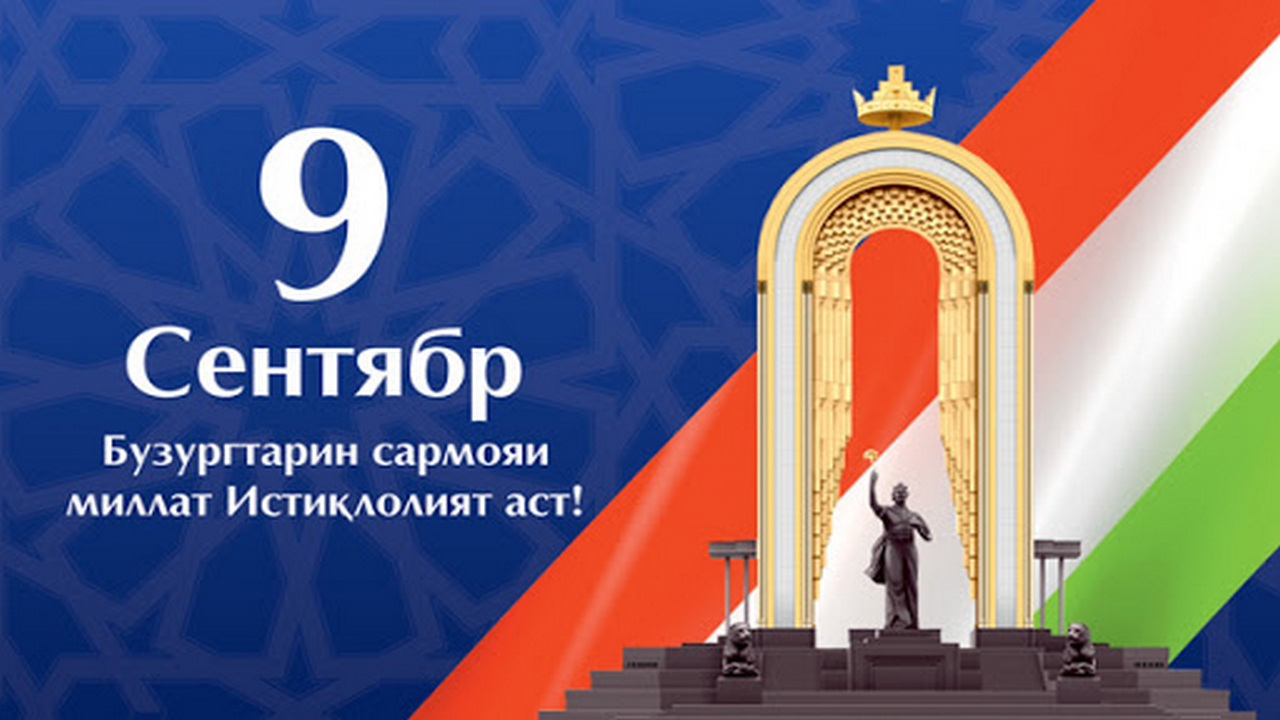
In 1991, mass rallies took place in Dushanbe, where representatives of national-democratic movements and the opposition demanded full independence and the resignation of the party leadership. As a result of these events, on September 9, 1991, during an extraordinary session of the Supreme Soviet of the Republic of Tajikistan (12th convocation), the "Statement on the State Independence of the Republic of Tajikistan" was adopted. This historic document officially declared Tajikistan’s independence, and from that day, Tajikistan appeared on the world map as an independent state. Since then, the global community has studied the advanced experience of the "Tajik peace" and presents it as an example of constructive dialogue for the modern generation.
Achieving independence was not an easy feat. After September 9, 1991, Tajikistan faced tragic events, and in 1992, a civil war broke out, leading to significant loss of life and economic devastation. The war, which lasted until 1997, was a result of political, regional, and ideological conflicts. However, it was during this period that the role of Emomali Rahmon, who became Chairman of the Supreme Soviet in 1992 and President of the Republic of Tajikistan in 1994, proved to be crucial.
When the Tajik people were divided, fighting against each other, no one dared to take on the leadership of the country. Everyone understood that leading the state during a fratricidal war was an immense burden. It was in these difficult and fateful moments for the nation that the Leader of the Nation, esteemed Emomali Rahmon, took on this responsibility with unwavering courage and determination. In his first speech at the Arbob Palace, he vowed to bring peace to the Tajik people, and we have witnessed how the Head of State fulfilled his oath.
The days when President Emomali Rahmon traveled to Afghanistan for negotiations cannot be forgotten. That trip could have been his last at any moment, as no one could guarantee his safety. With self-sacrifice, courage, wisdom, and foresight, esteemed Emomali Rahmon brought Tajiks to the round table—the table of peace—agreeing to the demands of the opposition.
The experience of the Tajik peace is so unique that it has been studied and applied worldwide, as it is rare in history for a nation in conflict to achieve reconciliation in such a short time. History shows that in such cases, fratricidal wars often last for years, leading to the loss of many lives and the destruction of states. Undoubtedly, the Tajik peace is the greatest achievement of the President of the country, which has made him beloved in the hearts of the people. Through his insight, the Head of State, in a short period, led Tajikistan out of a state of war and commander rule, ensuring national unity and reconciliation.
The Leader of the Nation, esteemed Emomali Rahmon, after 1,200 years, once again united the Tajik people and revived independent Tajikistan, presenting it on the global stage as a peace-loving and progressive nation.
In 1997, with the signing of the General Agreement on the Establishment of Peace and National Reconciliation, the civil war ended, and Tajikistan entered a phase of reconstruction and development. These events demonstrate that independence is not only a state right but also a struggle for unity and stability.
Independence, as the cherished dream of our people, is also a moment for reflection and analysis of the responsibility of every citizen for preserving the past and engaging in constructive work for the present and future of our beloved Motherland.
It is this high sense of responsibility toward the past, present, and future of the Motherland and the nation that compels each of us to strive for the prosperity and tranquility of our country, to work honestly and diligently, and to always remain vigilant and wise in protecting national and state interests, so that we may worthily fulfill our duty to the Motherland and the people of Tajikistan.
The future of Tajikistan in strengthening its independence depends on the development of science and technology, tourism, attracting investments, and raising a patriotic younger generation. The initiatives of the President of the country in the areas of "Years of Rural Development, Tourism, and Folk Crafts" and the "National Development Strategy until 2030" serve as a guide for the future.
The state independence of the Republic of Tajikistan is not only a historical event but also a source of pride and responsibility for every citizen of the country. Since September 9, 1991, Tajikistan has overcome challenging stages and transformed into a stable and independent state. This independence allows the Tajik people to preserve their identity and occupy a worthy place in the global community. We all bear responsibility for preserving this achievement—both in addressing internal challenges and in strengthening international relations.
Independence is freedom, unity, and a bright future for our beloved Tajikistan!
Happy State Independence Day of the Republic of Tajikistan, dear compatriots!
Press Center of the Agency.