 English
 Русский
 Тоҷики

The history of the Tajik nation is filled with pages of both tragedy and pride. One of the most tragic periods, undoubtedly, was the challenging early years of independence when Tajikistan was plunged into the vortex of a civil war. This brutal conflict led to loss of life, displacement of tens of thousands of compatriots, and the collapse of state structures. Hope for a brighter future was overshadowed by despair.
However, during this fateful and perilous period, our nation chose a path that transformed the destiny of both the state and the nation. Under the leadership of the distinguished son of the nation, His Excellency Emomali Rahmon, who was elected as the country’s leader during the historic XVI session of the Supreme Council of the Republic of Tajikistan at the Arbob Palace in Khujand, constructive processes were initiated. This session, rightfully called historic and salvational for the nation, marked the beginning of the path to peace and national unity.
The newly appointed Chairman of the Supreme Council, His Excellency Emomali Rahmon, boldly declared in one of his first speeches: “I swear that I will sacrifice my life for peace!” These words were not merely a political slogan but the spirit of a new state-building effort, later proven through consistent peacemaking initiatives.
In a society suffering from division, mistrust, and emotional wounds, negotiations between the government and opposition forces began. Finally, on June 27, 1997, in Moscow, the General Agreement on the Establishment of Peace and National Accord was signed. This pivotal document not only ended the civil war but also laid the foundation for strengthening modern statehood and preserving independence.
Today, with pride and satisfaction, we can say that national unity was not only the end of the war but also the cornerstone of the state’s sustainable development and the peaceful life of its people. Thanks to peace and accord, Tajikistan emerged from the abyss of destruction and embarked on a path of creation and construction. Ensuring national security, economic development, and the construction of roads, power plants, and other infrastructure were made possible on the basis of this historic peace.
It was unity that allowed our nation to look toward the future and strengthen national statehood in an environment of peace and stability. The state has made significant progress toward its strategic goals—energy, food, and communication independence. Tajikistan’s international standing has been enhanced, and it has become an influential player in the region.
Today, national unity, as the highest societal value, is being passed on to the new generation. We, the youth of the independence era, though not witnesses to the events of 1992, understand through books, articles, documentaries, and the speeches of the Leader of the Nation that today’s peace and tranquility were hard-won. This historical miracle came at the cost of thousands of martyrs and the sacrifices of countless heroes. Therefore, every conscientious citizen is obliged to preserve peace and stability and protect national unity—the pillar of the state’s existence.
As the English philosopher Bernard Shaw said: “The image of a nation is shaped by an outstanding scholar, a renowned athlete, and a wise statesman.” For the Tajik nation, this wise statesman is undoubtedly the esteemed Leader of the Nation, His Excellency Emomali Rahmon, who, with courage and wisdom, united a fragmented nation and introduced the new statehood of Tajiks to the world.
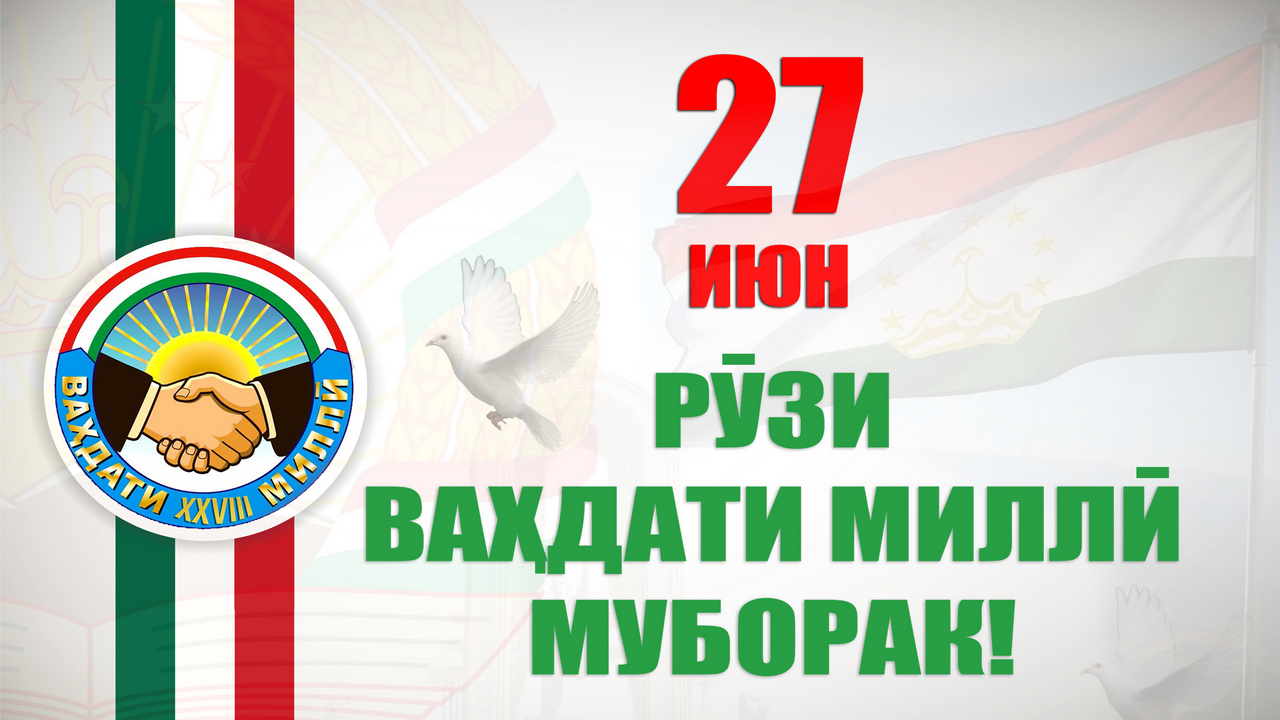
For over twenty-seven years, June 27 has been celebrated as National Unity Day. This is not just a historical date but a day of respect for self-awareness, identity, and the nation’s culture of peacemaking. The youth, who hold the future of the country in their hands, must cherish unity as a sacred legacy and serve faithfully for the prosperity of beloved Tajikistan. For unity is the essence of the nation and the foundation of the state’s endurance.
It should be emphasized that the signing of the peace agreement was not merely a political act but a symbol of the nation’s consciousness, wisdom, and high culture. National unity signifies brotherhood, dialogue, tolerance, and integrity. These values have become the cornerstone of modern Tajik statehood, paving the way for a just and law-based society.
Following the establishment of peace, Tajikistan achieved significant progress in political, economic, cultural, and social spheres. The construction of power plants, roads, schools, scientific institutions, the development of healthcare and education, and the improvement of living standards—all were made possible in an environment of peace, stability, and complete unity.
Today, Tajikistan is a vivid example of a country that learned a profound lesson from a national tragedy and transformed it into a driving force for the state. Thanks to national unity, the country preserved its independence, united its society, and chose a path of sustainable development and prosperity.
Considering the bitter experience of the not-so-distant past, every citizen of Tajikistan, regardless of religious, ethnic, linguistic, or social affiliation, is obliged to protect national unity as the apple of their eye. Every step, every national achievement, every scientific and cultural masterpiece, and every improvement in our country is possible only through peace, stability, and national unity.
On the eve of National Unity Day, we pay tribute to every compatriot and every advocate of peace and unity. The younger generation must know and learn about the turbulent history of the 1990s, the tragedy of the civil war, and the immense efforts of the Leader of the Nation and the loyal sons of the Motherland to ensure that the path of hatred and division is never repeated.
Indeed, national unity is not just a date on the calendar; it is a feeling, a responsibility, and a vital factor for the sustainability of any state and the happiness of any nation. It is this unity that today presents Tajikistan on the world stage as a peace-loving and developing state.
Press Center of the Agency